📣Through an outreach campaign, the archive gathered spatial and narrative stories of how it felt for yoga teachers to work through the pandemic remotely or in-person; how the return to in-person work experience had been, and the COVID-inspired use of alternative urban spaces for yoga classes. The Omeka Classic archive map and Google My Maps reiterations of it (see “The Difference“), showcased each studio on an interactive, geographical map with indication of the open or closed status, live stream and/or on demand offerings and news media, along with any publicly available data and/or crowd-sourced contributed content in the format of textual documentation, drawings, lesson plans, images, audio or written interviews and reflections.
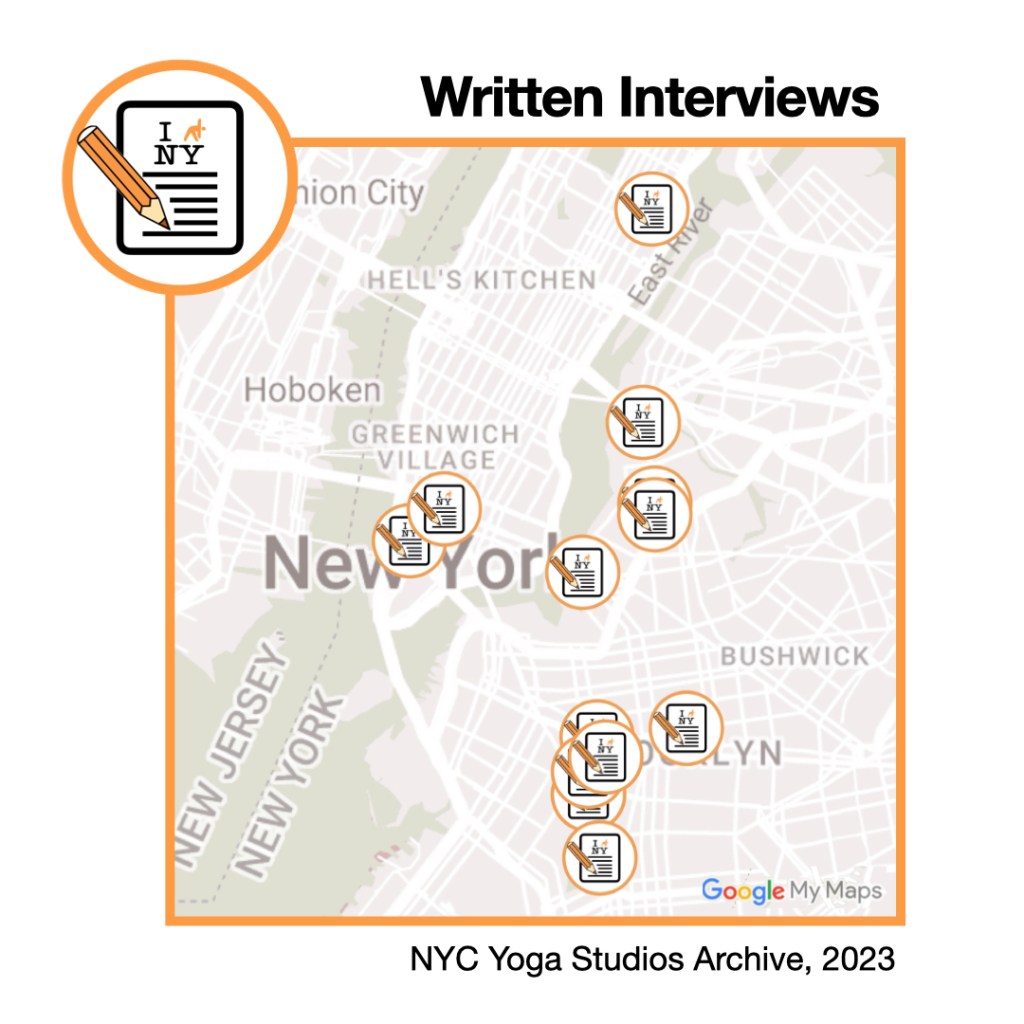
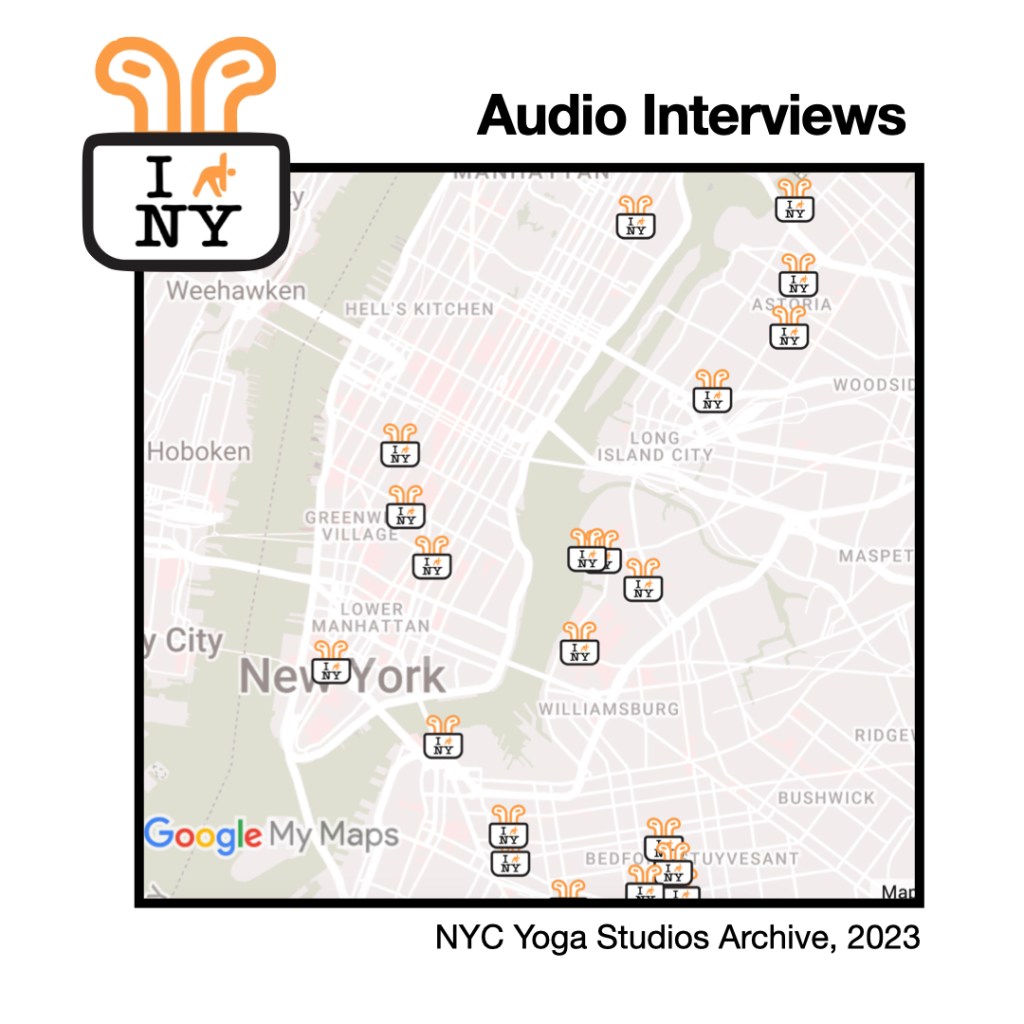
🔸The Contributions Exhibition Map hosts 12 audio and 11 written interview responses to the same questions. For maximum enjoyment purposes, audio streaming is best enjoyed on SoundCloud and Vimeo is best for closed captioning purposes. If you’re reading this message beyond autumn 2024, go to the SoundCloud as Vimeo subscription will deprecate (Note that there are 2 SoundCloud accounts that follow each other to keep costs down). Full transcripts are available to read on the associated contributor’s Omeka entry and on Google Docs.
🔸The primary audiences for NYCYSA are yoga workers who participated in the yoga community between January 2020-July 2023 and those interested in studying this project or time period for future scholarship. NYC was an ideal candidate for further study due to its size, history, population density, the high volume of studios, yoga’s longevity in NYC, and the diversity of styles offered. For the purpose of this project, the official Olympic definition of yoga is used when defining the practice on a broad spectrum. Yoga workers are defined as yoga teachers, yoga studio owners, or any individual that assists with yoga-related events on a regular basis. This may include workers such as yoga studio front desk or concierge workers, cleaning staff, and volunteers, who are sometimes referred to as karma yogis. A yoga teacher is typically understood to be a graduate of a 200 Hour Yoga Teacher Training that is registered with the Yoga Alliance. A yoga studio is understood as a physical space that is or was formed to host group activities, such as movement, anatomy, philosophy classes and chanting accompanied by live music. A teacher or studio’s subscription to the Yoga Alliance was not critically relevant for this project, but was utilized as it is one of the only unifying bodies for the audience of focus.

🛑DISCLAIMER: This work is licensed under a Creative Commons Attribution-NonCommercial-NoDerivatives 4.0 International License. This project was built under the supervision of the CUNY Graduate Center on 365 5th Avenue in New York, New York.
 NYC Yoga Studios Archive
Leave a comment